Trump’s threat to bomb Oman triggers backlash across Arab world and US
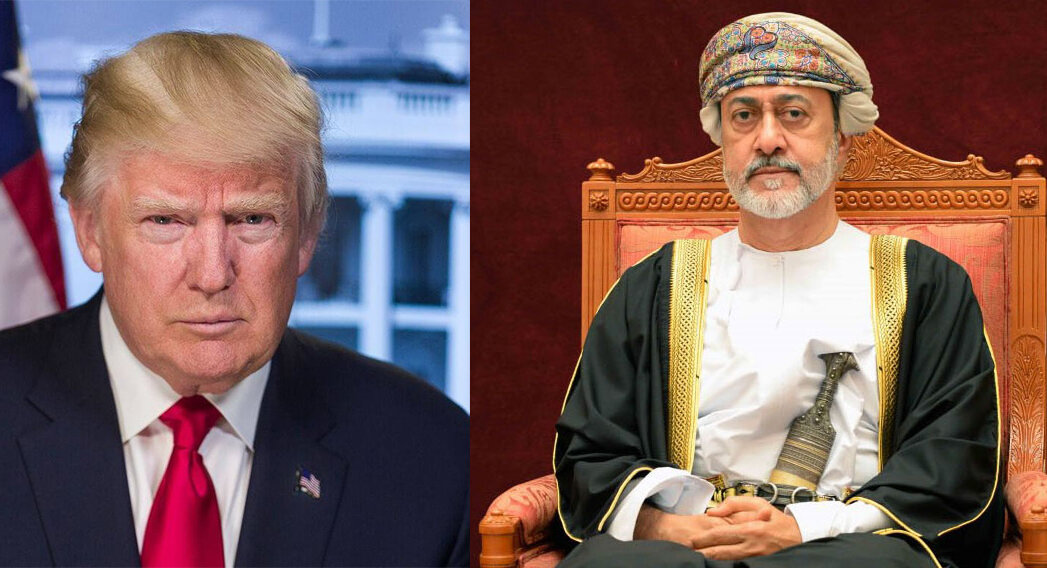
TEHRAN — Donald Trump triggered international backlash after threatening military strikes against Oman, reportedly punishing the Persian Gulf nation for negotiating a maritime traffic arrangement with Iran.
Speaking Monday in a telephone interview with Fox News correspondent Trey Yingst, Trump warned that “if Oman gets in the way, we’ll bomb the shit out of them.”
He later told reporters in the Oval Office that Muscat had not “behaved very well” and claimed the U.S. would “handle them very easily.”
‘Opposing Iranian-Omani management of Hormuz’
The administration’s aggression may stem directly from Oman’s diplomatic contacts with Tehran. According to a Tuesday report by the Associated Press citing regional officials, Trump threatened Oman because the country is finalizing an unannounced deal with Iran to coordinate ship traffic through the Strait of Hormuz.
According to AP, the Trump administration strongly opposes key elements of the arrangement, particularly joint Iranian and Omani management of the exit route out of the strategic passage. U.S. officials reportedly believe Oman has not taken a sufficiently firm stance against Iran.
The administration also objects to Oman collecting voluntary fees from commercial vessels for maritime security and environmental protection, according to AP.
Arab commentators slam the silence of their governments
The Omani government maintained its customary diplomatic silence, but Omani public figures reacted with sharp defiance.
Editor Hatem Al-Ta’i of Al-Roya described the threats as political bullying that exposes Washington’s inability to reopen the waterway by force.
Writer Abbas Al Zadjali noted that respect cannot be built through threats, pointing out that Trump previously warned Oman in May to “behave just like everybody else, or we will have to blow them up.”
Academic Abdullah Baabood observed that Washington effectively demands total obedience, forcing partners into a rigid “with us or against us” choice.
Across the Middle East, media coverage focused heavily on the failure of regional bodies to defend a member state.
Kuwaiti magazine Kawalees criticized the total absence of a collective Arab denunciation.
Political analyst Dr. Fouad Ibrahim told Nabaa TV that the silence of the [Persian] Gulf Cooperation Council demonstrates its complete subordination to Washington.
UAE political scientist Abdulkhaleq Abdulla argued on X that the [P]GCC Secretariat should reject the threat in the strongest terms.
Jordan’s Ammon News and Egyptian commentator Moataz Matar highlighted the blatant double standard: Arab capitals issue immediate protests over Iranian rhetoric, yet offer complete silence when an American president threatens an Arab nation.
The reaction of U.S. lawmakers
Inside Washington, the threat against the long-standing mediator in the Middle East drew prompt political pushback.
Senator Tim Kaine (Democrat of Virginia) called the remarks “deranged” and said he would file a War Powers Resolution to prohibit military action against Oman. Kaine warned that torching an alliance to fuel the war on Iran would damage American credibility while benefiting China and Russia.
Representative Ro Khanna (Democrat of California) mocked the White House, suggesting that Congress might need to file war powers resolutions concerning 192 other countries.
Senator Sheldon Whitehouse (Democrat of Rhode Island) publicly asked when congressional Republicans would admit that the president had “lost his mind.”
Foreign policy experts expressed similar dismay. Retired Admiral James Stavridis stated on CNN that he could not understand threatening a reliable partner.
Former U.S. Ambassador to Oman Mark Sievers warned that coercive threats are designed to force Muscat out of the mediator role so Washington can dictate terms.
Danny Citrinowicz, a former Israeli military intelligence official now at the Institute for National Security Studies, noted that threatening Persian Gulf allies further weakens Washington’s regional standing.
By threatening a nation that has served for decades as a diplomatic bridge between Washington and Tehran, the White House has once again exposed the coercive core of its strategy.
When diplomacy produces outcomes outside American direction, partnership gives way to military blackmail.
Leave a Comment